START A PUNK SCENE

What If Nothing Is Happening Where You Live?
I was born in Providence, Rhode Island, and lived there for a while. Gradually, my family migrated out of the city and into the suburbs. In 1977, we landed in North Kingstown, Rhode Island. I'm not going to call it rural. It was definitely the suburbs, but there were farms. A lot of them. North Kingstown is a seaside town with this quaint little village called Wickford that looks like it belongs on a postcard.
When I started school there, I quickly realized something. Everybody seemed to know everybody, or they were related. I was definitely on the outside looking in. It would be a couple of years before I made any friends at school that I really clicked with. The first was Jeremy. I'm not exactly sure how it happened, but we became friends. Then we discovered our dads worked at the same place. That was it. Best friends.
WE FOUND PUNK
When I heard the Sex Pistols for the first time, I told Jeremy about it and we started trying to figure out what punk actually was. We had no fucking idea. We were in elementary school. At the time we were listening to whatever rock music we could get. Black Sabbath, Ozzy, the Rolling Stones and shit like that. It was music we had access to, and we liked it. Gradually punk started seeping into our world.
Older kids around us were getting into it. We could hear their music. We could ask questions. Somebody would have a cassette. Somebody else knew another band. By the time we entered sixth grade, punk was becoming part of our musical world. Yeah, we still listened to commercial rock bands too. But punk was starting to take hold.
By 1981, more music was becoming available to us. We had mixed tapes from friends, older kids, and basically anybody who had something we hadn't heard. If we got into Providence, we could actually find records by punk bands. At this point none of us looked particularly "punk." We looked like kids. I was already wearing combat boots, if that counts for anything. There wasn't anybody I knew in our immediate area who looked like the stereotypical punk rocker. Then we started getting records with pictures of punks on them. That's when things changed.
WE STARTED LOOKING LIKE PUNKS
A lot of the records we could find were British bands and compilations, so naturally a lot of our early ideas about what punk looked like came from the UK; Mohawks, Spiked hair, Leather jackets, Studs, Bondage pants, Chains. That whole look.
A lot of American punk bands looked much more like regular kids, especially as hardcore developed. But I loved the UK punk look. So, I started trying to create my own version of it. It didn't take long. By the time we were getting into eighth grade, I looked pretty punk rock. Jeremy was sort of there, but I don't think he was ever as interested in the flashy UK look as I was.
Here's the important part: We were the scene. As far as we knew, there weren't any other punks around. Maybe there were. We certainly didn't know them. It was basically us. We had other friends, but they weren't "punk." When we'd hang around, skate, or whatever else kids did, we'd play music like Black Flag, Dead Kennedys, UK Subs, and even Crass. And believe it or not, some of our other friends started getting into it. One person heard something from another person, then another. a couple of people became four, four became six. Nobody sat down and announced: WE ARE NOW BUILDING A PUNK SCENE.
We were just hanging out and sharing something we were excited about, but that's exactly what was happening. We were building a tiny punk community. Sometimes that's how a scene starts.
ENTER HIGH SCHOOL: THE "HEY, FAGGOT" DAYS
Then came high school. Day one, I show up in a green leather trench coat with the Dead Kennedys logo painted on the back, ripped-up jeans, combat boots, a homemade punk shirt, and a chain and lock for a belt. One of the first things I hear is: "Hey, faggot! Nice hair." And so began what I affectionately refer to as the "Hey, Faggot" days.
I quickly realized there was going to be some opposition to the way I looked. Name-calling was one thing. Whatever. But sometimes it became physical. That was different. So naturally I started noticing anyone who looked remotely like they might be into the same thing I was.
Then I saw this guy; Mohawk, leather jacket, studded belts. Definitely punk. His name was Darin. He was older than me, but we became friendly, mostly at school at first. I already had friends, a whole collection of misfits who were into everything from hair metal to new wave and dance music. But as the aggression toward punks increased, something became obvious. Sometimes you needed people who understood exactly what you were dealing with. Toward the end of my first year of high school, I was walking through the library trying to avoid people when somebody said: "Hey kid. What's your name?" I assumed there was going to be trouble. I was wrong. The guy was wearing a Verbal Assault shirt, had short bleached hair and combat boots. I told him my name. He invited me to hang out with him and the other punk-rock-looking kids. There it was. My crew. My high-school scene.

THE SCENE GOT BIGGER
We all had lives outside school. Some of us were already going to shows regularly. We knew people from Providence, other parts of Rhode Island, and Boston, but those were people you mostly saw at shows. School was different, at school, you wanted people to hang around with, people who understood you, people who had your back. Eventually we had a pretty big group of punks hanging around together. Not everybody was best friends. It was more like several little groups connected by the same larger thing, and that's important.
A scene doesn't mean everybody loves everybody. It doesn't mean everybody hangs around together every day. It means there are enough overlapping friendships, bands, shows, places and interests that everybody becomes part of something larger. That was our scene in our little town. WE DIDN'T KNOW WE WERE BUILDING ANYTHING
Here's the thing, that was the 1980s. Punk and hardcore were growing. More teenagers were discovering the music. Kids found one another. A lot of scenes developed almost organically. Punks existed, punks found other punks, punks became friends, people started bands, bands played shows, people met more people, and it kept going.
Some of those relationships lasted decades. When I go to shows today, I still run into people I knew back then, and sometimes something strange happens. For a few hours, the old scene comes back. We're older, people moved, people got married, had kids, built careers, had entire lives outside punk. but put enough of us in the same room with a band playing and somehow the connection is still there. That says something. We weren't just listening to the same music; we built a community, And some of those relationships lasted a lifetime.

THE LONE PUNK
Now it's 2026, not 1984. Let's face it: punk isn't what punk was. In 1984, if you saw somebody walking down the street with blue hair, a leather jacket and combat boots, there was a pretty good chance you had found another punk. Not anymore.
Punk helped normalize a lot of things that once made somebody look unusual. Colored hair, spiked hair, piercings, tattoos, Mohawks. Now Grandma can have blue hair, tattoos and combat boots and be on her way to Target. That's fine, but it means the old visual code doesn't work anymore. You can't necessarily spot another punk across the street.
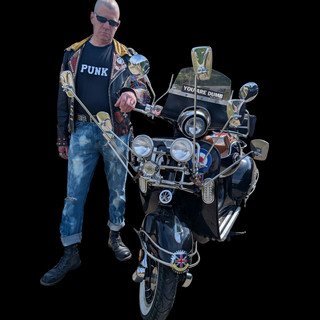
I moved out of Providence in 2014 and ended up in rural Connecticut. I had my reasons, kids. I wanted to give them something different. Yeah, I bought into that shit too, everybody does eventually. As you might expect, there's not a lot of obvious punk-rock activity where I live. I've still got my blue mohawk. I still lean heavily toward the UK punk look. I look like the stereotypical punk. I'm cool with that. On the surface, though, it can feel like I'm the only one, but I'm not.
There are older punks around here, people in their 40s, 50s and beyond. There are younger punks too, teenagers, people in their 20s, people starting bands, people listening to hardcore. The people exist.
What doesn't really exist is a scene. There aren't regular punk or hardcore shows around here. There isn't an obvious venue where everybody gathers. There isn't a common place where people consistently find one another, and that's the problem.

SHOWS BRING PEOPLE TOGETHER
Punk and hardcore shows do something that the internet can't completely reproduce. They put everybody in the same room. You put on a show and suddenly the punks come out. Somebody you didn't know lived ten miles away is standing next to you. People start talking, bands meet other bands, somebody knows somebody looking for a drummer, someone takes pictures, someone makes a flyer, someone tells you about another show. Friends are made; connections happen, a scene begins forming.
Without those common meeting places, everybody can exist separately without knowing anybody else exists. You can have fifty punks scattered across fifty square miles and still feel like you're the only punk around. That's the strange part.
A scene can exist in pieces before anybody puts the pieces together.
WHAT IS A SCENE?
Here's the deal. A scene isn't a building, a nightclub, definitely not a Facebook group, and it isn't five hundred people. A scene is people. It's you. It's your close group of friends, it's people you know casually, it's bands, it's people who go to shows, it's somebody taking photographs, somebody putting up flyers, somebody booking bands, somebody writing about what is happening, somebody making a zine.
Then there are all the people you recognize but don't really know. The guy you always see at shows, the woman photographing every band, the kid selling patches, the people from the next town over. You may not know their last names, you may barely talk, they're still part of the scene. A scene is really a bunch of smaller circles overlapping, and eventually those circles start connecting.
YOUR SCENE DOESN'T HAVE TO BE BIG
When people talk about punk scenes, they tend to think about famous ones; New York., Los Angeles, Boston, Washington, D.C, San Francisco, the big cities. Hundreds or thousands of people. Forget that for a minute. Your scene might start with five people. That's enough. You and your friends are the inner circle. The objective isn't to suddenly find 500 punks. Find another person, then another. Maybe there's a band two towns away, maybe somebody is taking pictures at shows, maybe there's a drummer sitting at home who thinks nobody around them likes punk., maybe an older punk has a basement full of amps, maybe somebody knows a hall where bands could play. The pieces are there.
Start connecting them.
YOUR SCENE DOESN'T HAVE TO BE YOUR TOWN
This is especially important if you live somewhere like I do. Don't get hung up on town lines. Your scene doesn't have to fit neatly inside one municipality. If you're in a small town, your scene might actually be regional. Twenty minutes this way, thirty minutes that way, a few towns connected by the same bands and people. That's still a scene. Who cares what the town signs say? If everybody is going to the same shows, playing in the same bands and supporting one another, that's your scene. Scenes are built around people, not ZIP codes.
SOCIAL MEDIA IS A TOOL, NOT THE SCENE
Here's where I'm going to sound old for a minute. You cannot build an entire punk scene on social media. You can absolutely start connecting one there. That's different. Technology is incredibly useful, to find people, shows, and what’s going on in punk and hardcore. But a thousand followers scattered around the country isn't the same thing as twenty people who will show up when a local band plays.
A scene has to eventually leave the screen, people have to meet, bands have to play. somebody has to go somewhere, something has to happen. Use the internet to get people into the room. That's where the scene begins.
GIVE PEOPLE SOMETHING TO GATHER AROUND
This is probably the most important part. Don't start by creating some grand organization. Don't spend six months making logos for the NORTHEASTERN WHERREEVER PUNK ROCK COMMUNITY ASSOCIATION, do something. Put on a show, start a band, make a zine, have a record swap, put together a punk flea market, have a patch-and-clothing swap, show some punk movies, put together an art or flyer exhibition, invite some bands to play in a basement Give people a reason to leave their houses. Because here's what I've learned: Activity creates community. People don't usually become a community and then decide to do things. They do things together and eventually realize they've become a community.
PUT ON ONE SHOW
If nothing is happening where you live, this is where I'd start. One show. Not a festival, not ten bands, not a three-day punk-rock extravaganza, just three local bands. Find a room, charge ten bucks or less, make it all ages if the venue and local rules allow it. Theen promote the hell out of it. Then see who comes of maybe thirty people show up. Now you know thirty people. Do some networking, also known as socializing. Find out who these people are, where they are from, and what they are into. Now your thirty-person crowd becomes information. That's how you find the pieces.
DON'T JUST LOOK FOR MUSICIANS
This matters. A punk scene isn't just bands. Maybe you can't play anything. Who cares? Everyone has some skill they can use to contribute. Maybe you’re an artist, photographer, writer, or maybe you travel a lot and can do wide area promotions. Everyone has some skill they can use. There's something for you to do. Some of the most important people in scenes never stood on a stage. They were the people who made everything else possible.
OLDER PUNKS AND YOUNGER PUNKS NEED EACH OTHER
This is something I think about a lot now. Older punks have experience. We know how some of this stuff worked Some of us have equipment; cars, money (sort of), contacts, and maybe even insurance and business experience. God help us. Younger punks have something equally important; The future, they have new bands, new ideas, different music, different ways of communicating. A scene that consists entirely of people my age becomes a nostalgia club. A scene that has no connection to the people who came before it may have to learn every lesson the hard way again. Put everybody in the room. Nobody has to agree about everything. We certainly didn't in the '80s, but we can still help one another.
DON'T TRY TO RECREATE 1982
This is important. I'm telling you stories from the 1980s because that's what I know. I'm not telling you we need to rebuild 1982. It's gone. Every generation should get its own scene. Take what worked, DIY shows, affordable tickets, all-ages spaces, small venues, local bands, zines, flyers, community, People helping one another. Then use the tools we have now.
Websites; Social media. smart phones, streaming, cheap digital recording, digital photography, print on demand, online calendars, group chats. The philosophy can survive without pretending the last forty years never happened. Take the philosophy. Upgrade the tools.
DOCUMENT THE DAMN THING
This is something I wish we'd done more of. Take pictures, save flyers, write down the bands that played, interview people, record shows, write scene reports, make zines, put things online, because documentation does something besides preserve history. It tells other people: We are here. Some kid ten miles away searches for punk shows and finds your photos. Now they know. A band sees your flyer, they contact you, another promoter sees the show, or someone writes about it. Documentation creates visibility, visibility brings people, people create activity, activity builds the scene.
SUPPORT OTHER PEOPLE'S SHIT
If somebody else puts on a show, go. If somebody starts a band, listen. If somebody makes a zine, buy one. If another promoter starts booking shows, don't immediately decide they're your competition, that's corporate bullshit. If your objective is building a scene, then somebody else putting on a successful show is good for you too. Their crowd might come to your show. Your bands might play their show. Their photographer might photograph your bands. The whole thing grows. MAPA doesn't succeed if MAPA has to control everything, it succeeds when people start doing things without us. That's a scene.
DON'T BECOME THE PUNK POLICE
Another thing that can kill a scene pretty quickly is spending all your time deciding who is punk enough. Is that band really punk? Does that haircut count? They listen to the wrong music. They're too old, they're too young, they bought their jacket, they don't know some band from 1981. Who gives a shit? There are obviously behaviors that shouldn't be tolerated, but endless authenticity tests don't build anything.
Here's a better question: Are you contributing? Are you showing up? Supporting bands? Making something? Helping somebody? Good. You're useful.
IT WILL PROBABLY SUCK AT FIRST
Your first show might have twenty-seven people. Your first zine might look terrible. Your first band might be awful. Your social media page might have eleven followers. Nobody may submit anything. A band might cancel. Your venue might decide they never want you back. Welcome to DIY punk. Do another one, then another. Scenes aren't launched like some corporate product, they're accumulated. One show. One band. One friend. One flyer. One person who brings another person next time. Eventually you look around and realize something exists that didn't exist before.
HOW DO YOU KNOW WHEN YOU HAVE A SCENE?
You'll know. Someone you've never met shows up, a band contacts you because another band told them about your shows, somebody else starts putting on events, a new band forms, people start taking pictures, someone starts a zine, people begin traveling from other towns. You hear somebody say: "When's the next show?" And eventually something really important happens. Things start happening that you had nothing to do with. That's when you've built something, because a scene isn't one promoter, one band, one website, one group of friends. It becomes bigger than the people who started it.
BRING IT ALL TOGETHER
I didn't intentionally build a punk scene when I was a kid, neither did my friend Jeremy. We found music we loved, we played it for our friends, we found other people, those people introduced us to more people, we went to shows. From there friendships formed, and eventually there was a community.
Now I'm living somewhere where that doesn't seem to exist, at least not yet. I'm trying to figure out whether we can build one again. I'm not writing this from the top of some massive thriving punk scene. I'm trying it too. Maybe you're in the same position. Maybe you're sitting in some small-town thinking: There's nothing happening here. Okay. What are you going to do about it?
Find one person, then another. Find a band and go to a show. Talk to people. Make something. Because here's the thing: You don't build a scene and then start doing things. You start doing things, and that's how the scene gets built. We all work together. We all support each other. We all support the scene. Now go start one.


Comments