START A PUNK BAND
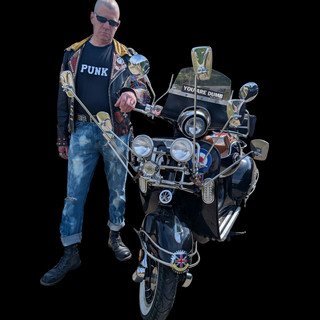

You Don't Have to Be Good. You Have to Start.
Okay, so let's say you're a "musician." I'm using that word pretty loosely here. Maybe you sing. Maybe you play guitar, bass, or drums. Maybe you can't play for shit, but you know three chords. That's okay too. Maybe you don't even own an instrument yet. There have been plenty of punk bands that started out sucking like nobody had ever sucked before. Some got better. Some didn't. Some of them probably sounded better because they never got too good.
Hell, I was in a few shitty bands myself. Sometimes we had one person who could actually play. The rest of us drafted our friends.
"You're the drummer."
"I don't know how to play drums."
"You'll figure it out."
And guess what? After a month or so, they sort of could. Good enough.
My point is that a band doesn't magically happen because four accomplished musicians find each other. I've known good musicians who couldn't make a band work together at all. A band is a group of people. You have to work together. You have to listen to each other. You have to get along well enough to spend hours in a basement playing the same two-minute song over and over again until it stops sounding like four people playing four different songs. You have to mesh. Technical ability helps. But you can learn how to play. Finding people who actually want to make something happen is harder. You're not putting together some corporate rock supergroup. You're starting a punk band. And if you're practicing in your parents' basement, congratulations. You're already halfway there.
I'VE BEEN IN SOME SHITTY BANDS
Like I said, I've been in some pretty shitty punk bands. Guess what? We still played actual shows in actual clubs. We were good enough. My first real band was called Missing Link. We had a great guitar player, an okay bass player, and a drummer who didn't particularly want to be in our band. That's a promising start. The guitar player and I wrote the songs and worked out how we wanted everything to sound. Then we'd show the other guys what we wanted them to play. We practiced for a few months. Eventually we made a cassette demo. Then we did what bands did: we took that cassette around to clubs and tried to get somebody to let us play. One of them actually did. We were opening the show. Holy shit. We were a real band. For approximately two songs. Some guy in the audience, not a punk and apparently not a Missing Link fan, started heckling us. Eventually he threw a beer bottle at the stage. I kicked it back at him. Then I did something that apparently made perfect sense to my 15-year-old brain. I pissed on him from the stage. Yes. Actually pissed on him. That was the end of our set. And, as it turned out, the end of Missing Link's illustrious live career. I'm not recommending this as a strategy for getting repeat bookings.
But here's the important part: We started a band. We wrote songs. We practiced. We recorded a demo. We got a club to book us. We got onstage. We played two whole songs before I destroyed our career. Technically, that's a band.
THEN THERE WERE MORE SHITTY BANDS
In the late '80s there was Pontius Pilate and the Nail Drivers. For some reason, we had trouble getting gigs with that name. Go figure. That band was different because we actually had musicians. More importantly, we were all good friends and got along really well. That made a huge difference. We put some songs together, practiced, got ourselves a gig at a club, and actually played the whole set this time. Progress. Unfortunately, that was about it. Two of the guys left to concentrate on their other project, a straight-edge band. They ended up doing pretty well and eventually toured Europe.
Then came Da Ballz. Da Ballz spent considerably more time drinking than practicing. We did manage to write some songs, but eventually the whole thing fizzled out. After that, I pretty much stopped starting bands. There were a few times when friends and I talked about doing something, but nothing ever really came together. And that brings me to something important.

BEING IN A BAND IS WORK
Starting a band is easy, keeping one going is the hard part. You have to practice, regularly. You have to learn the songs. You have to write new ones. You have to get tighter. You have to deal with somebody not showing up for practice. You have to deal with somebody wanting to change the song everybody else likes.
Eventually you have to figure out how to record yourselves. Then you've got to promote yourselves. Then you've got to convince somebody to let you play somewhere. And if you actually get the gig, you've got to get everybody and all their shit to the venue at the same time. Then do it again. That's being in a band.
You don't have to be a great musician, but you do have to show up. I'll take somebody who knows three chords and shows up every Wednesday night over some brilliant guitar player who cancels every other practice. Because the first person is actually in the band.
SO, START A BAND
Maybe you've been thinking about it. Maybe you play guitar in your bedroom. Maybe your friend has a bass. Maybe you know somebody who has a drum kit but can't really play it. Maybe you've got no musical ability whatsoever but you've always wanted to scream into a microphone.
Good. There's your starting point. Don't wait until you're "good enough." That's backwards. Start the band and get better together. You don't need four virtuosos. You don't even necessarily need the traditional guitar, bass, drums and vocalist setup. Use what you've got. Two guitars and drums? That’s fine. Bass, drums and vocals? Also fine. Guitar and a cheap drum machine? Why the hell not? One guitar, somebody banging on buckets and your friend screaming? I've heard worse. Start making noise. If it turns into music, you're doing pretty well.

STEP ONE: FIND SOME PEOPLE
Before you worry about gear, you need people. Not necessarily musicians. People who want to be in a band. There's a difference. Ask your friends, ask people you see at shows, put something online, talk to the person wearing the band shirt, and ask around at record stores or music shops. Maybe somebody already plays. Maybe somebody has always wanted to learn. Maybe you find an experienced drummer. That’s great. Maybe you find somebody who says: "I've never played drums, but that sounds fucking cool." Also, great. You can learn. The important thing in the beginning is finding people who want the same basic thing. You don't even have to agree about every band. Actually, it's probably more interesting if you don't. But if one person wants to start a hardcore band, another wants to sound like the Sex Pistols, somebody else wants to play ska, and the drummer is determined to start a Rush tribute band, you may have some negotiations ahead of you. Figure out roughly what you're trying to make. Then get in a room and make some noise.
STEP TWO: GET SOME GEAR
You don't need a $3,000 guitar to start a punk band. Please don't convince yourself that you do. My first guitar came from Sears with an amp. Maybe you already have a guitar and a little practice amp. That's a start. Maybe your buddy has a bass. Maybe somebody's older brother has an amp sitting in a closet. Ask. Borrow things. Buy used. Hit yard sales, flea markets, pawn shops, Facebook Marketplace and other local marketplaces, used sections at music stores, and talk to other musicians. Look for ugly gear nobody else wants. You need functional, not impressive.
The first guitar I would recommend to a new punk isn't necessarily the guitar hanging beautifully on the wall of some boutique shop. It's the guitar you can afford to beat the shit out of while you're learning. Same with amps and drums. Get something that works. You can worry about better equipment when you're better at using the equipment you already have. And don't feel like everybody needs their entire live rig immediately. You're trying to practice; a small amp can do that. Borrow a bigger one when you get a show. Share equipment with another band. Build things up gradually. Use what you have. Find what you need. Don't let what you don't have stop you from starting.

STEP THREE: FIND SOMEWHERE TO MAKE NOISE
Now you've got another problem. You're loud, really loud. You need somewhere to practice where your neighbors, landlord, parents, roommates, spouse, children, dog, or local police department aren't going to end the band before you've written your first song.
Traditionally, punk has had a sophisticated solution to this problem: Somebody's basement. Garages work too. So, do rehearsal rooms. Sometimes bands share practice spaces and split the cost. The room doesn't have to be cool. It doesn't need mood lighting. You need electricity, enough room for everybody and permission to make noise for a couple of hours. Then establish a practice schedule. Not: "We should get together sometime." That's how Da Ballz happens. Pick a day: every Wednesday at seven or Sunday afternoon. Whatever works. Then show up. At first, you're probably going to sound terrible. Good. You're officially practicing.


Comments