PUNK'S NOT DEAD. SO, WHAT HAPPENED?
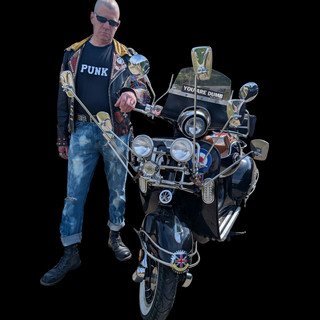

No, Punk is not dead. People have been announcing the death of punk for almost as long as punk has existed. The Sex Pistols broke up. Punk was dead. Hardcore came along, Punk was dead. Grunge happened, Punk was dead. Green Day got huge, Punk was definitely dead. Hot Topic started selling punk clothes in the mall, really fucking dead now. Then came the internet, streaming, social media and whatever we're calling alternative music this week, and somehow punk is still here.
There are still bands, there are still shows, there are still kids starting shitty bands in garages. There are still old punks standing at the back of the room complaining that the show starts too late. There are scenes where punk and hardcore are doing just fine. So no, punk isn't dead. But at least in much of the United States, it doesn't always feel like it did.
So, what the hell happened? I don't think there's one answer. I think punk changed, America changed. The music business changed, technology changed, and most importantly, the way punks find each other changed.
PUNK DIDN'T DIE. IT SPLIT INTO PIECES.
In the late 1970s and early 1980s, punk in America was already changing fast. The early punk bands stripped rock down. Then hardcore pushed everything faster, louder and more aggressive. Bands like Black Flag, Minor Threat, Bad Brains and countless others weren't waiting around for major record labels to discover them. Bands started labels, made records, booked their own tours. The played small clubs, rented halls and whatever other spaces would take them. People made zines, people traded tapes, people put up flyers, a DIY network developed. It wasn't one giant national punk organization. It was a bunch of local scenes that connected with other local scenes. That distinction matters. Punk was local, but those local scenes talked to each other.
A band from California could eventually make its way to Boston or Providence because somebody knew somebody who knew somebody who could find them a room and maybe a floor to sleep on. It was held together with phone calls, letters, flyers, zines, record stores, college radio, cassette tapes and people. It shouldn't have worked nearly as well as it did, but it did.

THEN CAME THE '90s
By the end of the 1980s, things were already changing. Then the 1990s arrived, and, of course: Grunge. Grunge wasn't my thing. Not at all, but you couldn't ignore it. When Nirvana exploded into the mainstream, alternative music suddenly became serious business. The funny thing is that grunge didn't come from another planet and murder punk. A lot of what was happening in alternative music had connections to the underground music culture punk helped build. The important change was that the music industry realized there was money in this shit. Underground-looking music could sell millions of records. Alternative wasn't necessarily alternative anymore, it was becoming mainstream.
Then bands associated with punk exploded too, Green Day, The Offspring, later Blink-182 and a whole generation of pop-punk bands. Suddenly music that descended from punk could be on commercial radio, MTV and in shopping malls. That created one of punk's favorite activities: Arguing about who sold out. Was Green Day punk? Was pop-punk punk? Could a punk band sign to a major label? Could something still be punk if millions of people liked it? People fought about this shit endlessly.
Meanwhile, punk kept going. Hardcore kept going. DIY bands kept going. Small scenes kept going. But now there was an increasingly visible commercial version and a bunch of underground versions existing at the same time. Punk didn't disappear. It fragmented.

PUNK BECAME SOMETHING YOU COULD BUY
Something else happened. The punk look escaped punk. When I was younger, there were things that immediately identified somebody as part of the subculture: colored hair, Mohawks, leather jackets, combat boots, studs, piercings, tattoos, ripped clothes, band shirts nobody else had heard of. Eventually those things became normal, and that's actually kind of a victory.
Punk helped push a lot of outsider aesthetics into mainstream culture. People have more freedom to look however the hell they want, but there was a side effect. In 1984, if I saw some kid with a blue mohawk and combat boots, I had a pretty good reason to walk over and start talking about bands. In 2026? That person might love hardcore, they might love Taylor Swift, they might love both, or they might not give a shit about music at all. You can't spot the punk anymore.
At the same time, clothing companies figured out that punk looked cool. You no longer had to destroy an old jacket and paint a band logo on the back. You could buy the look. Again, I'm not saying buying punk clothing makes somebody a poser. Hell, I buy shit too. The interesting question is something different.
What happens to DIY when you no longer have to do it yourself? I think the answer is that DIY becomes less about how you look and more about what you do. You start a band, put on a show, make something, write something, help somebody build a scene. That's harder to buy at the mall.

THEN THE INTERNET WAS GOING TO SAVE US
Remember when the internet was going to bring everybody together? In some ways, it absolutely did. Today, some kid in rural Connecticut can discover an unknown punk band from Indonesia in about thirty seconds. That's fucking incredible. Bands can record music at home and put it online immediately. You don't need somebody's mailing address to get a demo. You don't have to send five bucks hidden inside an envelope and hope a record eventually shows up. Bands can contact venues directly. Promoters can reach thousands of people instantly. Musicians can collaborate across enormous distances. Online music communities really can create connections between people who might otherwise never meet. So, the internet isn't the enemy, but it created a weird contradiction. We became globally connected and locally disconnected. You can know everything about a band thr nee thousand miles away and have no idea there's a punk band practicing fifteen minutes from your house.
THE ALGORITHM REPLACED THE BULLETIN BOARD
This is where I think something important changed. In the old days, information moved through punk spaces. You went to the record store. There were flyers. You went to a show. Somebody handed you another flyer. You bought a record. There was an address inside. You read a zine. You heard about five bands you'd never heard before. You talked to somebody. they told you about another show. Everything led somewhere else. People were the algorithm.
Today information moves through platforms like Facebook, Instagram, TikTok, YouTube, and Spotify. Whatever comes next? Those systems are incredibly powerful, but they're also fragmented. You see what the platform decides to put in front of you.
Someone can post a flyer for a local punk show and half the people who would actually want to go may never see it. There's more information than ever before. That doesn't necessarily mean we're better informed. Modern music culture is increasingly organized through a relatively small number of digital platforms, and social-media music sharing is shaped partly by algorithmic mediation and fleeting engagement. So, the problem isn't that the internet destroyed punk. It's that the internet changed how punk finds punk, and I don't think we've completely figured out the replacement for the old local network.

WHERE DID THE LOCAL SCENE GO?
This might be the biggest part of it for me. What made punk work wasn't just the music, it was the places: record stores, small clubs, all-ages shows, VFW halls, basements, practice spaces, college radio, zines, and bulletin boards. Certain restaurants, coffee shops and bars where everybody knew people hung around. Some of those places still exist, some don't, others changed. QAnd when those physical gathering places disappear, something important goes with them. because a scene requires people to actually encounter one another.
A website can help. Social media can help. Streaming can help. But eventually somebody has to walk into a room. That's where bands meet other bands, where somebody finds a drummer, where somebody asks who booked the show, where someone hands you a flyer, where friendships happen. You cannot slam dance on Spotify. Trust me, I’ve tried.
WE GOT OLDER TOO
Here's another uncomfortable truth. We got fucking old. The teenagers who were going to hardcore shows in 1982 are now in their 50s and 60s. People got jobs, got married, had kids. moved, bought houses, stopped going to shows. Some came back, some didn't. That's life. Every scene loses people as they get older. The problem happens when there isn't a strong bridge to the people coming next. Younger punks shouldn't have to recreate our version of punk. They need their own, but older punks have something useful. Experience. We know how to book rooms. We know what worked. Some of us have equipment. Contacts, money. Jesus Christ, we became adults. Younger punks have something considerably more important. The next forty years. Put those generations together and maybe something interesting happens.

WHAT ABOUT POLITICS?
Politics were absolutely part of the atmosphere surrounding punk and hardcore in the 1980s. The United States went through recession and high unemployment early in the decade. Ronald Reagan's presidency reflected a major conservative shift in American politics. The Cold War and nuclear-war anxiety were real parts of the culture. Bands responded to all sorts of things like war, government, police, religion, nuclear weapons, consumer culture, economic conditions, and conformity. Reagan himself became a favorite punk target.
Then the political environment changed again during the 1990s. The Cold War ended. Different political leaders took office. Economic conditions changed. Culture changed. But I don't think we can say punk disappeared because one political party replaced another. Punk survived Reagan. It survived Bush. It survived Clinton. It survived every president after them too.
Punk doesn't require one particular politician to exist. What it requires is something to question, and human beings seem extremely capable of providing that.
THE WORLD DIDN'T RUN OUT OF THINGS TO BE PISSED ABOUT
This is why I don't buy the idea that punk faded because society somehow fixed itself. Really? Everything's fine now? We solved inequality? War? Racism? Homophobia? Government bullshit? Corporate power? Alienation? Young people feeling like nobody listens to them? Excellent. Glad we cleared all that up. The circumstances change. The anger changes. The issues change. But there will always be people who look at the culture around them and say: This is bullshit. That impulse didn't disappear. Maybe the soundtrack changed.
PUNK BECAME A THOUSAND LITTLE ISLANDS
Today there isn't one thing called punk. Maybe there never really was. Bands that don't fit neatly into any category. Some scenes overlap, some barely talk to each other. Then you've got older punks, younger punks, DIY bands, basement shows, online communities. Everything exists simultaneously. That's why punk can look dead from one place while being completely alive somewhere else. You're looking at one island. There may be twenty others just beyond where you can see.
A SCENE CANNOT SURVIVE ENTIRELY AS AN AUDIENCE
This is where I think we have some responsibility. It's easier than ever to consume punk. Spotify is a great resource to find new and old punk. Even My Space is making a comeback! Great. But scenes aren't built entirely by consumers. Somebody has to start the band. Somebody has to book the room. Somebody has to make the flyer. Somebody has to photograph the show. Somebody has to write about the band. Somebody has to make the zine. Somebody has to work the door. And somebody has to actually show up. A scene cannot survive entirely as an audience. Punk works best when the distance between the audience and the people creating things gets blurry.
You went to a show, now start a band. You saw somebody's flyer, make one. You read a zine, write something. Somebody booked a show, book another one. Participate.
STOP TRYING TO PROVE WHO'S MORE PUNK
Punk has always been remarkably good at fighting with itself. Old punk versus new punk. Hardcore versus punk. Underground versus mainstream. This band sold out. That band isn't real punk: You bought your jacket. You don't know the right records. You're too old. You're too young. At some point you have to ask: What exactly are we accomplishing here? There are things worth standing up against, but endlessly testing everyone's punk credentials doesn't put another band onstage.
Here's the test I'm more interested in: Are you doing something? Are you supporting something? Are you helping build something? Good. Let's start there.

WILL PUNK COME BACK?
Will punk ever come back the way it was? Probably not, and I don't think it should. I don't want to recreate 1982. I was there. It already happened. The Clash happened, Black Flag happened., Minor Threat happened, Dead Kennedys happened, The Sex Pistols happened. Great. Who happens next?
That's a much more interesting question. The clothes don't need to look the same. The bands don't need to sound exactly the same. The politics won't be exactly the same. The technology certainly isn't the same. What can survive is the idea. You don't need permission to start the band, make the shirt, print the zine, find a room, put on the show, or build something where nothing was happening before.
MAYBE PUNK DOESN'T NEED TO COME BACK
Maybe that's the wrong way to think about it. Punk never completely went anywhere. The bands are out there. The people are out there. The shows are out there. The old punks are out there. The young punks are out there. What's missing in some places isn't punk. It's connection.
Maybe punk doesn't need saving. Maybe it needs reconnecting. Connect the band to the audience. Connect the kid looking for a band to the people looking for a guitarist. Connect the promoter to the hall. Connect the photographer to the show. Connect the old punks to the young punks. Connect one town to the next. Then get everybody into the same room.
That's where MAPA comes into this. The website isn't supposed to replace the scene. Neither is social media. They're supposed to help you find it. The website succeeds when somebody gets off the website and does something.
SO, WHAT HAPPENED TO PUNK?
Nothing, and everything. It grew up. It split apart. It influenced mainstream culture. Mainstream culture sold some of it back to us. Technology connected us across the world while sometimes making our own neighborhoods harder to see. Some gathering places disappeared. Some scenes faded. New scenes formed. Old punks got older. New punks showed up. The music changed. The world changed, and punk changed with it, but it didn't die. We lost some of the ways we used to find it, and each other. So, let's build new ones.
We all work together. We all support each other. We all support the scene. Punk's not dead. Now prove it.


Comments