BACK TO PROVIDENCE
Finding the Punk Scene Again
By Ronnie Rocker

This is my story. I've always said Providence was my city. I was born there. I lived there for most of my life. At one point, I knew that city like the back of my hand. Then I left. In 2014, I moved to Connecticut. I still go back whenever I can, but I'm just going to say it: Providence has changed. Of course it has. Cities change. People change. Scenes change, but when you've spent most of your life somewhere, there's a weird feeling when you return and realize that the places that defined your version of the city aren't there anymore. The record stores, the clubs, the bars, the places where people hung out, the places where you knew that if you went there, sooner or later you'd run into somebody you knew. Well most of them are gone. And that's what got me thinking: Can you actually go home again? And if you can, how the hell do you find everybody?
THE PROVIDENCE I REMEMBER
Most of the clubs I remember are gone, The Living Room, Lupo's, The Rocket later Club Baby Head. The Cage, The Last Call Saloon, memories now. The Met is still around, although even that isn't quite the same Met from my younger days.

Then there was Thayer Street. Thayer Street was where the freaks met. It was where you could find all the record stores, cheap food, the army surplus and people hanging around. You could grab a slice of pizza, get a beer, or resourceful enough, get a hot dog at Spike's, hit the Army Surplus, look for records, spare-change people and generally cause some harmless trouble. There was also Taco Maker. You could get a bunch of tacos, nachos and a Coke for a few bucks. It wasn't fancy, that was the point. If you were punk, into rock and roll, or just some weird kid looking for other weird kids, Thayer Street was somewhere you could go. You didn't necessarily need a plan, you went there because people were there. That's what's hard to explain about scenes after they're gone. sometimes the most important places weren't the venues. They were the places you went between the shows.
THE ONE UP
There was also a bar called The One Up. This was a second-floor bar on the edge of downtown owned by Bob Hymers, singer for Rash of Stabbings. If there wasn't a show happening, there was a good chance we'd end up there. We drank, hung out, met people, talked about bands, politics, and generally nothing at all. We did absolutely nothing productive. It was one of those places that becomes part of a scene without anyone deciding it should become part of a scene. It was just where everybody went. Those places matter, because a punk scene isn't only what happens when the band starts playing, it's what happens before the show, after the show, the next afternoon or on that Tuesday night when absolutely nothing is happening. A scene needs places where people can find each other.
A FEW PIECES ARE STILL THERE
There are still a few old places I like going when I'm back in Providence, Tortilla Flats is one of them. I've been going there since the 1980s. Punk rockers hung out there, worked there, had beers and ate burritos there. Then there's Pat's Pub on Smith Street. Pat Griffin, the owner, is an old friend. I actually named my son after him. In the 1990s, Pat's was this wonderful mixture of old Irish guys, punks and assorted characters all drinking and singing together. On Friday nights we'd go see Irish bands, pound our glasses on the tables and sing along. It was an amazing place. Pat's is different now too. Everything is, time does that.
CAN YOU GO HOME AGAIN?
They say you can never go home again, I think that's bullshit. Well, sort of. You can absolutely go home again, you just can't expect home to have been sitting there waiting for you. Providence is still Providence, but there are new shops, new restaurants, new bars, new clubs, new bands, and new people. There are places I've never been. There are bands I've never heard. I still have friends in the city. When I go back, I usually stay with one of them. Sometimes a show brings out the old crew, and for a few hours it feels like nothing changed. Then you look around and realize everybody got old. What the fuck happened?
Those moments feel like home, but they're not the whole scene anymore. They're my old scene. There's a difference, and to understand that, you have to go back to the beginning.
1980–1984
Providence in the early 1980s was a strange place. Like a lot of old industrial New England cities, it had seen better days. There were old factories and mills, empty buildings, and places that looked abandoned. Parts of downtown weren't exactly places people were rushing to visit. On the weekends downtown was ghost town. To a kid, though? It was fucking fascinating.
In 1980, I was living in the suburbs about half an hour away. My father worked at a college in Providence. During the summer, sometimes he'd bring me and a friend into the city, and we'd spend the day wandering around. We were ten, alone, for hours. Welcome to Generation X. Apparently our parents' philosophy was: "They're probably still alive."
We'd walk around downtown looking for shit to do. Record stores were obviously important. Then there were what we called the "Chinese shops," places where you could buy all kinds of ridiculous shit, including what we considered "ninja weapons.", and yes, somehow people sold this stuff to ten-year-olds. It was a different time. We'd wander around for eight hours. There were occasionally shenanigans. I remember throwing a bunch of Superballs off a parking garage and watching them bounce everywhere below. Again, different time. All that wandering did something. We learned the city, and eventually, that city led me to punk.

MY FIRST PUNK SHOW
Providence is where I saw my first punk show. It was 1981 when The Living Room was still on Westminster Street. I was eleven years old. I had absolutely no idea what I was walking into. It was wild. It was crazy. What I remember most was the people. This was before the stereotypical studded-leather-jacket-and-mohawk image completely took over what people thought a punk looked like. People were wearing ripped clothes, jeans, suit jackets, homemade shit they'd altered themselves, People put thought and effort into how they looked.
When the bands started people were pogoing, pushing each other, generally “dancing”. Everything felt chaotic. For an eleven-year-old kid, it was a hell of an experience. We watched the show, went home, and that was it. I was hooked.
FINDING THE SCENE
By 1983, I was going to shows regularly. The Livingroom was one of the places where I could actually get into all-ages shows. I saw Black Flag, Circle Jerks, Dead Kennedys, and a pile of local bands. Neutral Nation was one of them, and decades later they're still playing.
But here's something I've been thinking about while working on MAPA: How the hell did we know any of this was happening? There was no internet, no Facebook event, no Instagram, no Google search for "punk shows near me." Information came from people, record stores, flyers on telephone poles, college radio, zines, somebody's older brother, a cassette somebody handed you. You found one band and that band led you to another band. You went to one show, and somebody told you about another show. People were the algorithm, and Providence itself was part of that network. You went where the punks went, and eventually you found punk.
THE MID-'80s
By the middle of the 1980s, I was looking pretty fucking punk rock. The scene was changing too. More clubs were willing to host punk and hardcore shows, including all-ages shows. There seemed to be something happening constantly. The older punk vibe was changing and hardcore had moved in hard. Circle pits became the norm, along with stage diving, faster bands, a younger crowds. I was completely into it. We'd get to shows early, ride skateboards, hang around, and get into assorted shenanigans. The big thing was we would talk to people. There were more kids involved, and adults were definitely starting to notice us. Not always positively. There was talk about a "punk problem. There was opposition to clubs letting underage kids into spaces associated with bars. People didn't always understand what the hell was going on. To outsiders, a hundred kids with shaved heads, leather jackets and combat boots slamming into one another probably looked like the collapse of Western civilization. To us? It was Sunday afternoon.
Luckily the shows continued, other places started doing them, like The Rocket and The Blue Pelican down in Newport. Sunday matinees became a big deal, and you could feel the scene growing.

1987
For me, 1987 was probably the pinnacle. I had a piece-of-shit car, a hot punk-rock girlfriend, and it seemed like there was a punk or hardcore show every night of the week. Sometimes there were two or three shows and we had to decide which one was better. That's a problem I'd love to have again. The Ramones seemed to be at the Livingroom constantly. Shows were cheap. Shows were packed. Bands from around the United States and Europe came through Providence, and it felt like punks and hardcore kids were everywhere. You didn't have to wonder where the scene was. You were standing in it.
THEN THINGS STARTED CHANGING
After that peak, things began changing. Shows seemed less frequent, and the crowds changed. Some venues closed or stopped booking the same kinds of shows. But we had another problem, Nazi skinheads started showing up around parts of the scene. We weren't particularly interested in having them there. That led to fights in clubs, fights outside clubs, and more trouble meant more problems for venues. And venues generally aren't excited about hosting events that end with people beating the shit out of each other in the parking lot.
The scene didn't disappear overnight. Scenes almost never do; they change a little at a time. A club closes, a promoter stops booking, a band breaks up, somebody moves, someone gets a job, someone has a kid, or people stop showing up. Then one day you realize there aren't as many places to go anymore.
ENTER THE 1990s
Somewhere around the turn of the decade, I saw Nirvana at The Rocket, or it might have been Club Babay Head (same place different name). This was before they became NIRVANA.
They were playing with bands we knew, so we went. They took the stage and I remember thinking: "What the hell is this shit?" I thought they were crap. Some people liked them, other people heckled them, I went outside. Apparently, I had a promising future as a record-company talent scout. A short time later, alternative rock and grunge exploded. I don't think Nirvana personally came to Providence and murdered punk, that's too simple, but something was changing culturally. The underground was being noticed, alternative music was becoming mainstream, styles changed the audiences changed, and the music people around me were listening to changed.
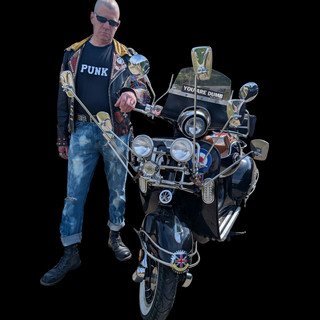
At the same time, Providence punk itself was changing. The flamboyant UK punk style I'd always loved had largely disappeared around me. Most people looked considerably more normal; T-shirts, jeans, and sneakers or boots. Meanwhile, there I was, still dressed like somebody had accidentally shipped a Sex Pistol to a hardcore show. Some things don't change.
AS ONE SCENE FADES, ANOTHER BEGINS
Then ska started getting bigger, and let's face it: Punks like ska. A lot of the punks and skins I knew migrated toward that scene. There were different bands, different sound, but many of the same people. We still went out, still saw each other, still drank, still had a community.
There were still punk shows too, but you could feel the era changing, and this is something I think gets lost when people talk about scenes "dying." They don't always die, sometimes they mutate. The people don't disappear, they start doing something else.
PARTY LIKE IT'S 1999
By the end of the 1990s, things definitely felt different. Clubs had closed. There were fewer shows. The scene felt smaller. It was less like thousands of people and more like an extended group of friends, but punk didn't feel dead. It just felt different. The heyday of the scene I had grown up in was over. Eventually things almost felt like they'd come full circle. A few show, here and there, smaller groups of people, and a lot of our free time was spent drinking beer, listening to records and hanging out.
Maybe that's another lesson. A scene isn't always enormous, sometimes it's fifty people, sometimes it's fifteen, and sometimes it's you and five friends sitting around listening to records wondering why nothing is happening.
LEAVING PROVIDENCE
By 2014, I was married with two kids, I owned a house in Providence, I had a full-time job. I still listened to punk, I still considered myself a punk, but I was living a completely different life. Outside the old crew, I wasn't particularly connected to whatever current punk scene existed. Even I looked like an average guy for a while, hard to believe, I know.
With two young kids, we weren't going out much. We weren't really using what the city had to offer. So, we did the thing I never imagined myself doing, we sold the house and moved to Connecticut. The suburbs. That still makes my brain hurt. It would be about five years before I really started coming back around Providence again. Five years doesn't sound like much, but cities don't wait for you, and neither do scenes.

BACK TO PROVIDENCE
When I started coming back, things were different. There were new places, faces, bands, and clubs. The old map in my head didn't work anymore. As far as punk goes, some of it felt strangely familiar. Old bands were getting back together, the bands I saw decades ago were playing again. Part of me looked at that and thought: Is this just everybody trying to relive the old days? I don't want punk to become a reenactment society. I don't need 1987 recreated for my benefit, I already had 1987. Then I started noticing something else; Young people were there. Not just us old farts. There were bands I'd never heard of, people I'd never seen before. Places like The Scurvy Dog were putting on punk shows, including those wonderfully ridiculous parking-lot shows. Newer clubs were booking punk and hardcore. There were old bands, There were new bands, there were older punks who looked like somebody's accountant during the week, and there were young punks discovering this shit for themselves. So, apparently Providence punk wasn't dead. The problem was I didn't know it anymore.
I KNOW PROVIDENCE. I DON'T KNOW THE PROVIDENCE SCENE.
That's a strange thing for me to admit. I spent most of my life there. I knew the clubs, the bands, the bartenders, the record stores, and I knew the people. I knew where to go. Now? I don't. Not really, and that's why I'm writing this article. I'm not writing a definitive guide to the Providence punk scene. I couldn't. I'm trying to find it again. Who are the bands? Who puts on the shows? Where are the DIY shows? Where do younger punks go? Are there all-ages shows? Where do people find out what's happening? Where do people hang around when there isn't a show? Who's photographing the bands? Who's making zines? Who's starting something? I don't know yet. That's kind of exciting.
HOW DO WE FIND EACH OTHER NOW?
That's the question I keep coming back to. In 1983, I could go to a record store, look at flyers, talk to somebody, or go to a show to meet another person. One thing led to another.
Today we have technology that supposedly connects everybody on Earth, and somehow I can live an hour away from a punk band and have absolutely no idea they exist. Maybe the answer isn't abandoning technology, maybe it's using it differently. Use the internet to find the band, then go see the band. Find the show online, then show up. Meet somebody, ask what other bands are playing. Talk to the band, talk to the person taking pictures, take a flyer, ask who booked the show, and go to another one. Maybe finding a scene in 2026 isn't actually that different from finding one in 1983, eventually you have to get out of the house.
MAYBE MAPA IS A BULLETIN BOARD
That's part of what I want Make America Punk Again to become, not the punk scene, not the authority on punk, not somebody sitting behind a computer telling everybody else what's happening. A bulletin board. Here's a band,, here's a show, here's a venue, here's a scene, here's somebody's story, here's something happening twenty miles from you that you didn't know existed. Then get off the website and go, because the website isn't the scene, the people are the scene.
CAN YOU GO HOME AGAIN?
Yeah, I think you can, but home isn't going to look the way you remember it. The Livingroom isn't coming back, The Rocket isn't coming back, The One Up isn't coming back, the old Thayer Street isn't coming back. And honestly? That's okay. Those places had their time, so did the bands I used to know. We had our time. Now somebody else gets theirs. I'm not trying to find 1987 Providence, I'm trying to find 2026 Providence. The bands playing now, the people putting on shows now, he kids discovering punk now, the older punks who never really went anywhere, and the weird little places where people are starting to gather. Maybe I'll find a thriving scene, maybe I'll find a bunch of disconnected little scenes, maybe I'll find something completely different from what I remember. Good. That's the point.
On October 18th, I'm heading back to Providence to see Agnostic Front. I'll probably run into some old friends. I'll probably see some people I've never met, and I'll do something I haven't had to do in Providence for a very long time. I'll start asking questions. Where are the shows? Who are the bands? Where does everybody go? What's happening here? Because maybe you can go home again, you just have to be willing to meet the people who live there now. See you at the show.


Comments